Ancient Mexican Cacao Ritual and Sacred Symbolism
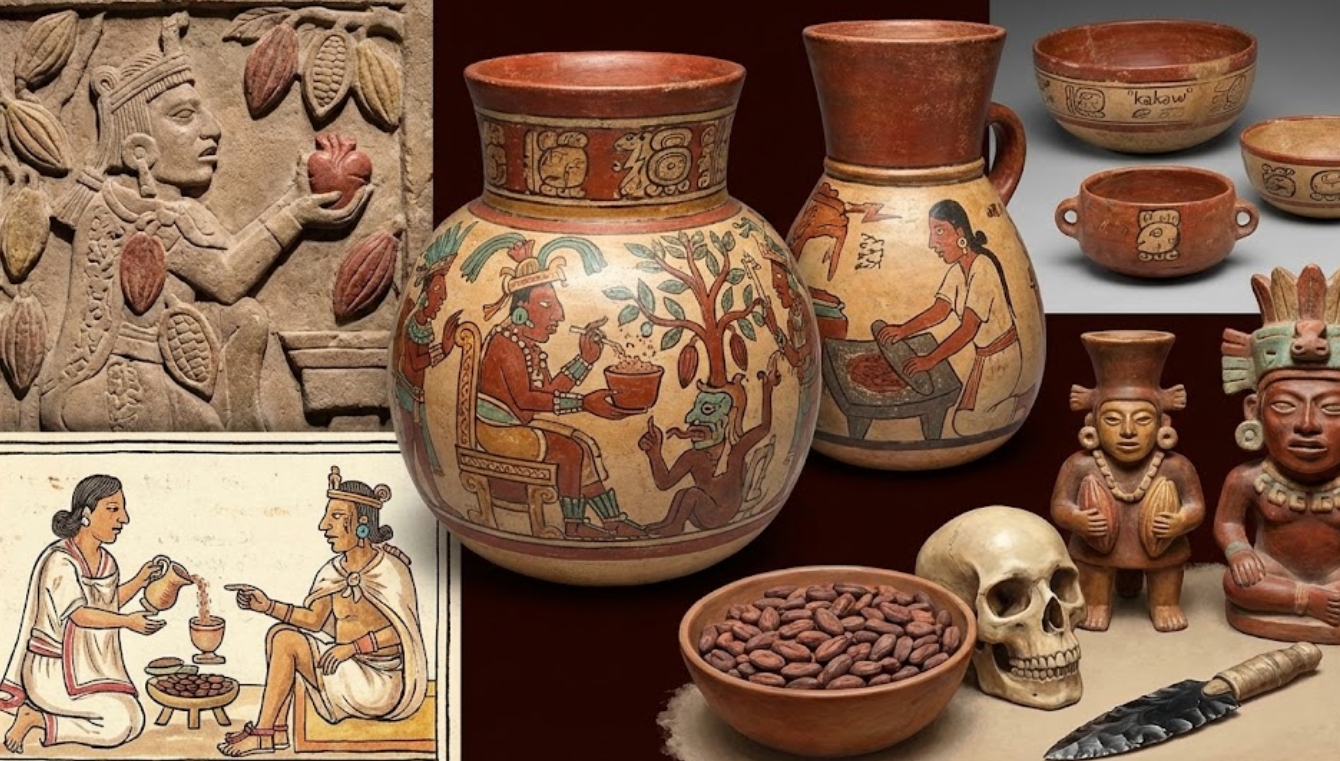
Cacao played an extremely sacred and central role in ancient Mexican civilizations, including the Maya, Aztec, and Olmec cultures. It was considered a divine substance used to connect gods, ancestors, and humans, and was deeply associated with blood, the heart, sacrifice, and life essence.
Core Belief: Gift of the Gods and Sacred Tree
In Maya belief, cacao was regarded as a sacred gift from the cacao god Ek Chuah. In Aztec mythology, cacao was brought to humanity by the feathered serpent god Quetzalcoatl. The name Theobroma cacao literally means “food of the gods.”
In Aztec cosmology, the cacao tree symbolized the southern direction of the universe and was linked to death, blood, ancestors, and cosmic balance.
Due to its high value, cacao beans were used as currency and became ideal offerings in ritual sacrifice and religious ceremonies.
Cacao, Blood, and Sacrificial Meaning
The cacao pod was symbolically associated with the human heart, while cacao beans and liquid represented blood and vital life force.
In ritual practices, cacao beverages were sometimes mixed with annatto (achiote) to create a red color resembling blood, strengthening sacrificial symbolism.
Aztec priests used cacao-water mixtures to cleanse obsidian knives used in human sacrifice ceremonies.
Human, Animal, and Self-Sacrifice Practices
Before human sacrifice, captives were given cacao drinks believed to elevate their spirit and prepare them for ritual death. Some individuals were dressed as deities, such as Quetzalcoatl, and honored for forty days with cacao offerings prior to sacrifice.
In rituals honoring the cacao god Ek Chuah, the Maya sacrificed animals such as dogs dyed in cacao color and decorated with feathers.
Elite Maya rulers and priests practiced ritual bloodletting, piercing ears, tongues, or genitals, allowing blood to drip onto cacao offerings as the highest form of devotion.
Ritual Consumption and Spiritual Transformation
Ancient cacao drinks were cold, bitter, unsweetened, and mixed with chili, maize, and spices. Consumption was restricted to elites such as priests, nobles, and warriors.
Drinking cacao during rituals was believed to induce altered states of consciousness, enabling communication with gods, ancestors, and natural elements.
Smoke produced during cacao preparation was also considered a spiritual offering to ancestral spirits.
Cacao in Life-Cycle Ceremonies
Cacao was widely used in birth rituals, purification ceremonies, marriages, and funerals. Couples exchanged cacao beans or shared cacao drinks to symbolize bloodline union and fertility.
Archaeological evidence shows cacao residue in elite tomb vessels, indicating its importance as sustenance for the afterlife.
Summary
In ancient Mexican civilizations, cacao was not merely food or drink, but a sacred bridge connecting life, death, and the divine. Through its symbolic connection to blood, sacrifice, and ritual exchange, cacao became essential to maintaining cosmic order and spiritual balance.
cacao ritual, sacred cacao, ancient Mexican cacao, Maya cacao ceremony, Aztec cacao sacrifice, Olmec cacao ritual, cacao blood symbolism, cacao heart symbolism, Theobroma cacao food of the gods, Quetzalcoatl cacao myth, Ek Chuah cacao god, cacao human sacrifice, cacao ritual drink, cacao baptism wedding funeral
Día de Muertos Cacao Offering Symbolism
During Día de Muertos, cacao functions as a sacred offering bridging the living and the dead. In ancient Mexican belief systems, cacao was offered to ancestors as nourishment for the soul’s journey in the afterlife.
Cacao placed on altars represents blood, memory, and life force, honoring ancestral presence and continuing spiritual connection.
The bitter and unsweetened nature of ritual cacao reflects respect, reverence, and remembrance rather than indulgence.
In contemporary Día de Muertos celebrations, cacao symbolizes continuity between ancient ritual practices and modern cultural remembrance.