MI CASITA REPTILE|GREEN TREE PYTHON
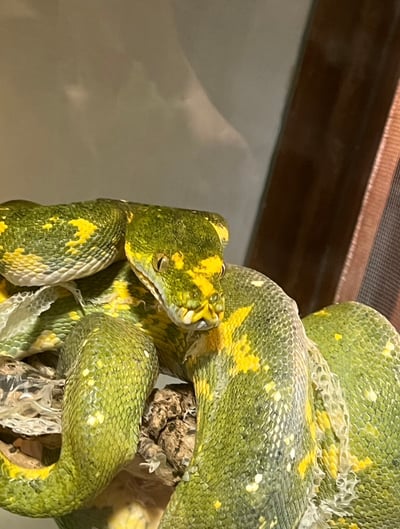
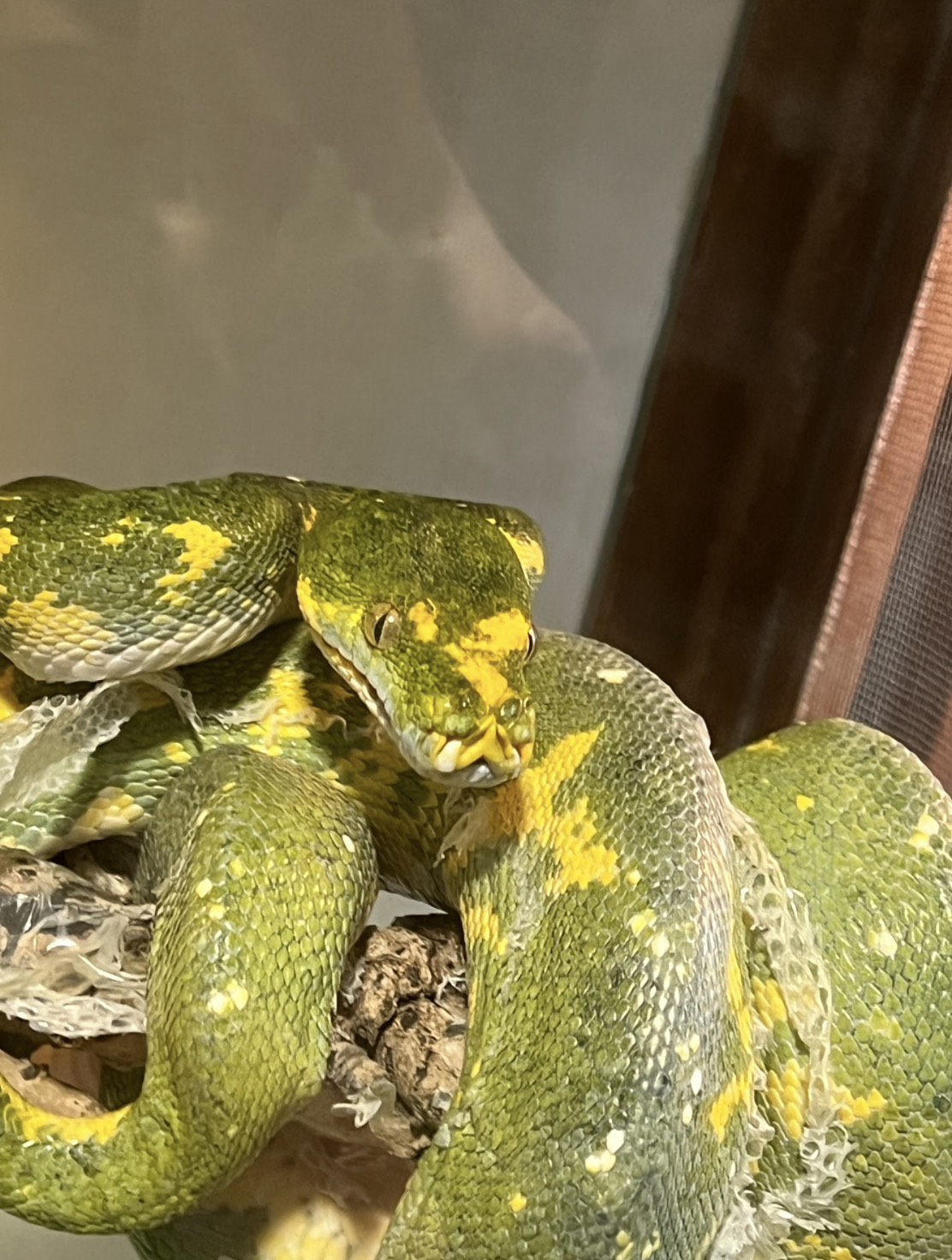
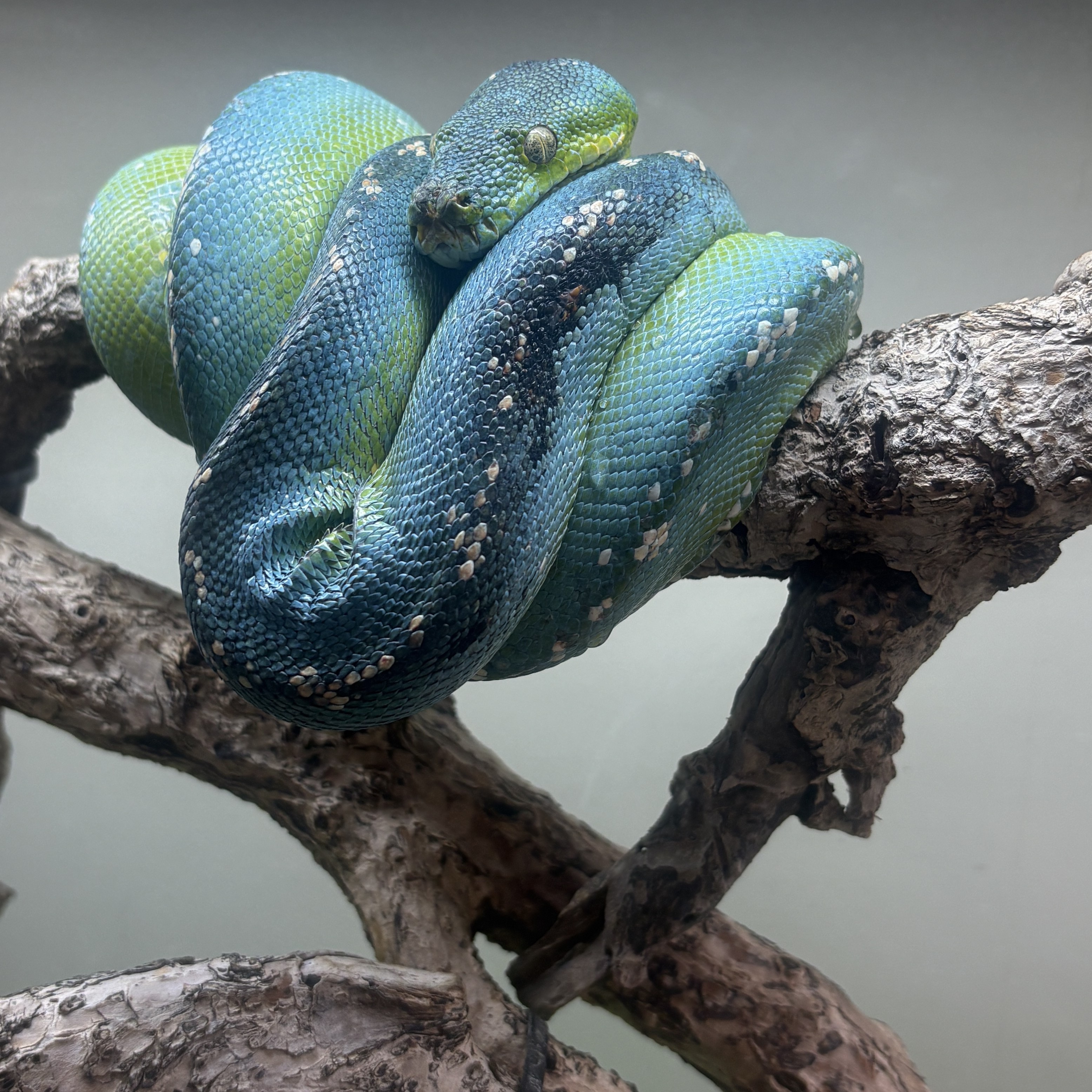
Male Green Tree Python|Aru Island Locality
Aru Island Green Tree Python|Morelia viridis Growth Record & Species Introduction

The Green Tree Python (scientific name: Morelia viridis) is an arboreal python native to New Guinea, eastern Indonesian islands, and the Cape York Peninsula of Queensland, Australia. They are renowned for their distinctive behavior of coiling on branches, vibrant coloration, and dramatic color changes during maturation. Using this male python from Mi Casita Reptile as a case study, this article introduces the species' characteristics, the Aru Island locality, dietary habits, key care guidelines, and professional documentation methods. Inaccurate claims popular in the hobby—such as "guaranteed single-gene blue transformation" or "genetic proof"—have been omitted in favor of a scientifically grounded perspective backed by established biology and breeding records.
What is a Green Tree Python?
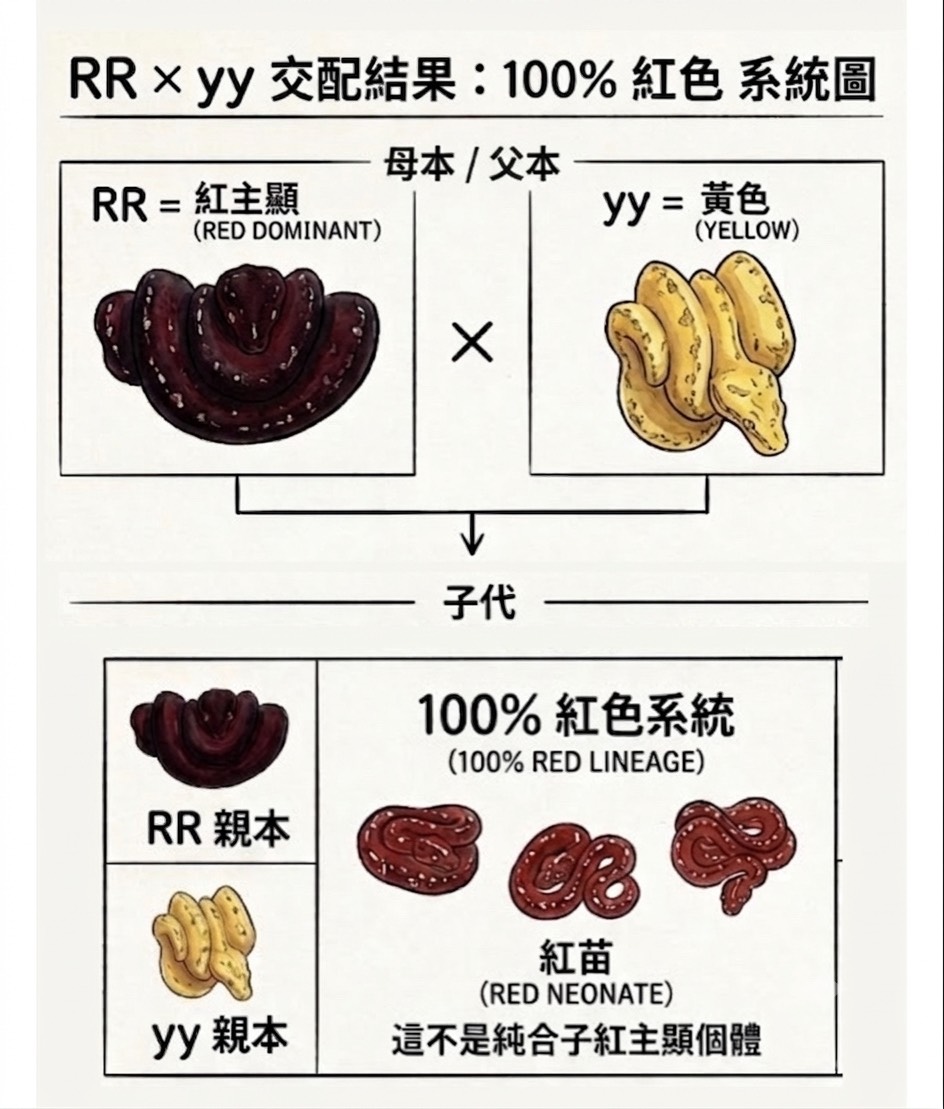
The Green Tree Python (scientific name: Morelia viridis) belongs to the family Boidae. They primarily inhabit tropical rainforests, lowland rainforests, lower montane forests, and secondary or regenerated woodlands. Juveniles and adults vary significantly in both vertical habitat use and coloration. Research indicates that Green Tree Pythons undergo Ontogenetic Colour Change (OCC); juveniles typically present a red or yellow morph, which transitions into the characteristic green morph as they mature.
Aru Island Locality Introduction
Located in eastern Indonesia, the Aru Islands represent one of the most frequently discussed geographic localities among reptile enthusiasts. Within the breeding community, an "Aru Island Green Tree Python" generally refers to individuals originating from or genetically tied to this specific geographical line. Key traits highly appreciated in this locality include a clean green base, white dorsal markings, a stable arboreal perching posture, and unique color nuances during maturation.
It is important to clarify that terms like "Blue-Black line," "High Blue," or "Blue Expression" are descriptive labels used within the hobby to specify aesthetic traits and breeding directions rather than scientifically proven, single-gene Mendelian formulas. Consequently, this page avoids absolute statements such as "offspring are guaranteed to turn blue" or "proven single-gene mutation." Instead, it relies on individual records, phenotypic observation, lineage data, and long-term husbandry logs as reliable methods of introduction.
Male Characteristics|Features
Species Name
Green Tree Python (Scientific name: Morelia viridis).
Geographic Locality
Aru Island Locality Green Tree Python. The Aru Islands are located in eastern Indonesia, forming part of the species' natural distribution range.
Arboreal Traits
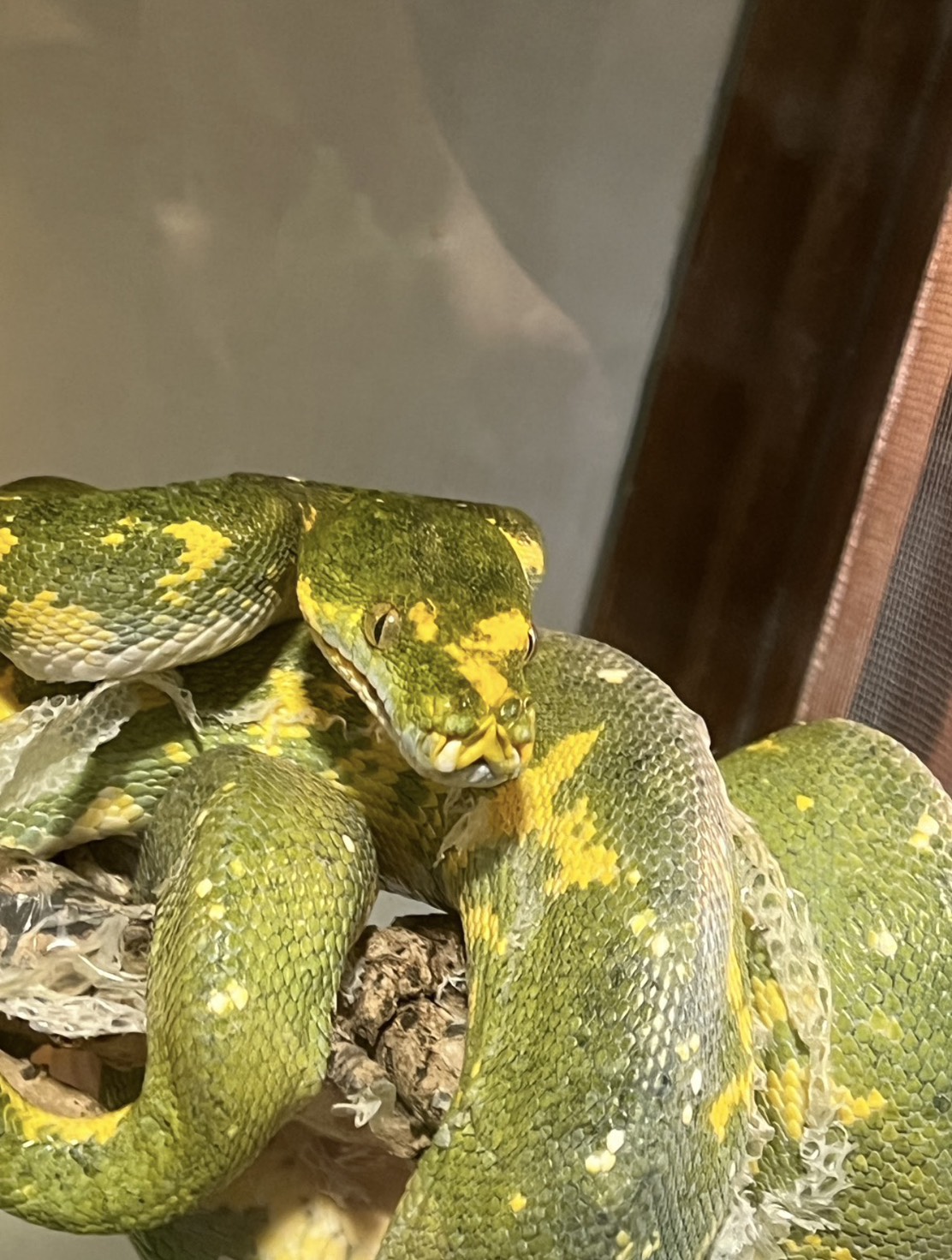
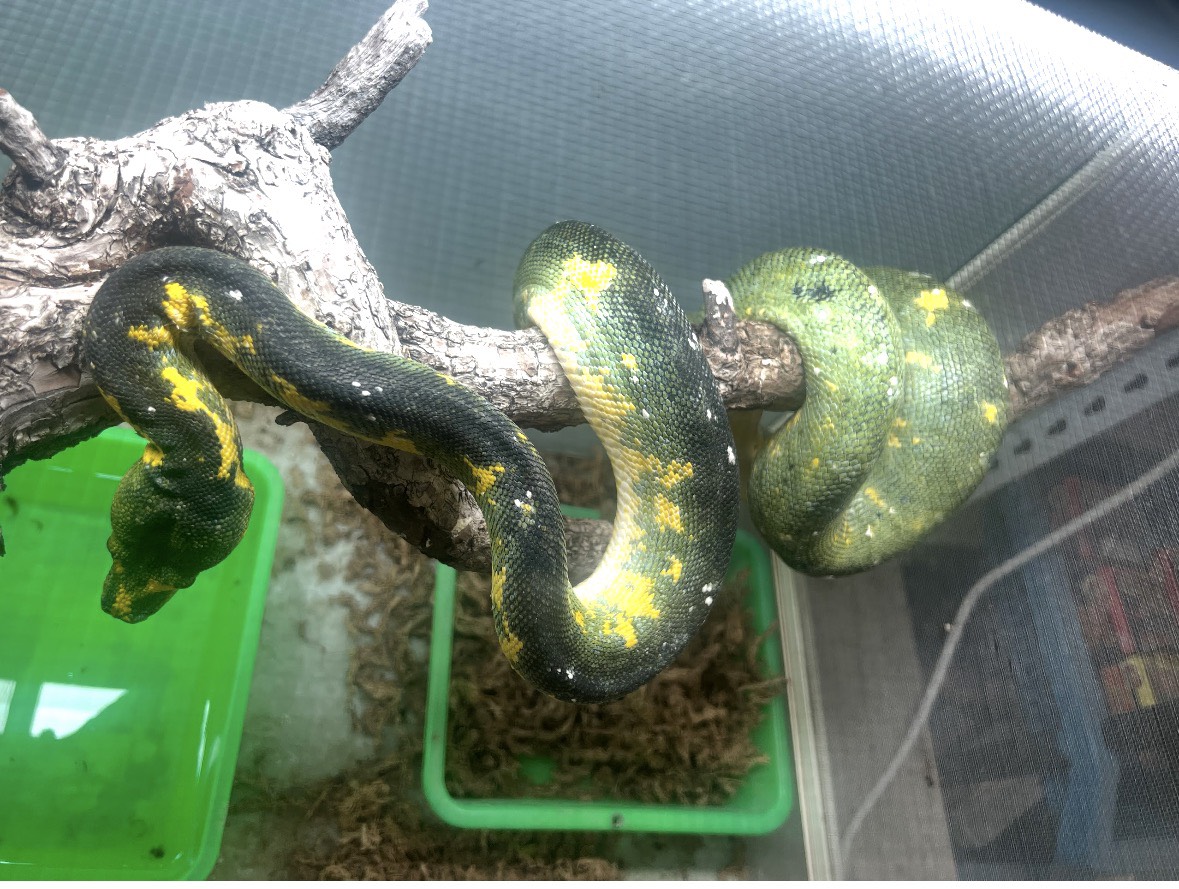
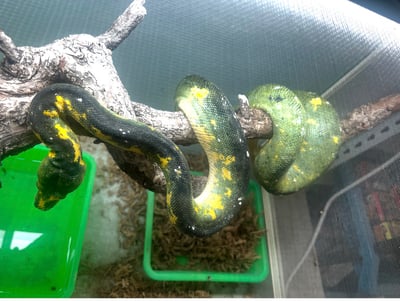
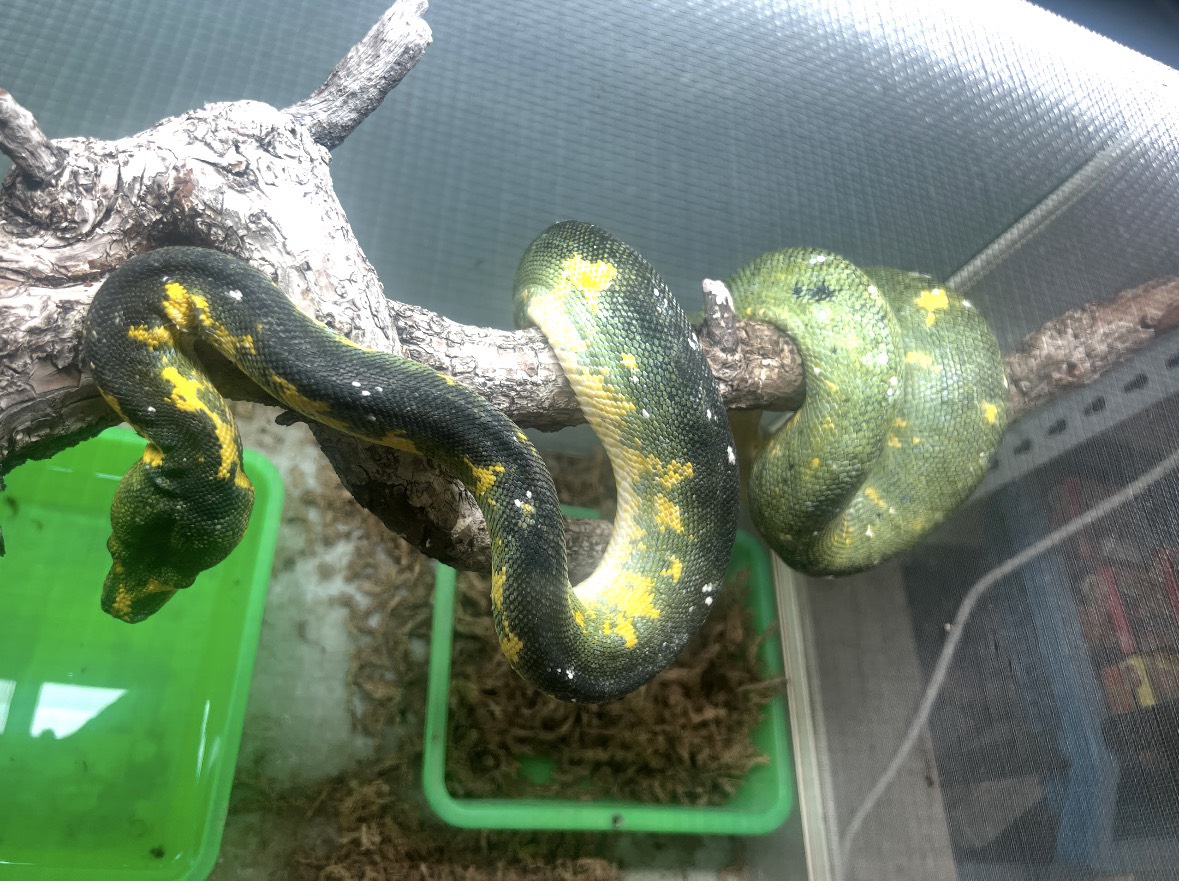
Highly arboreal snakes that typically loop their bodies over branches, resting their head either directly in the center or just in front of the coils.
Color Shift
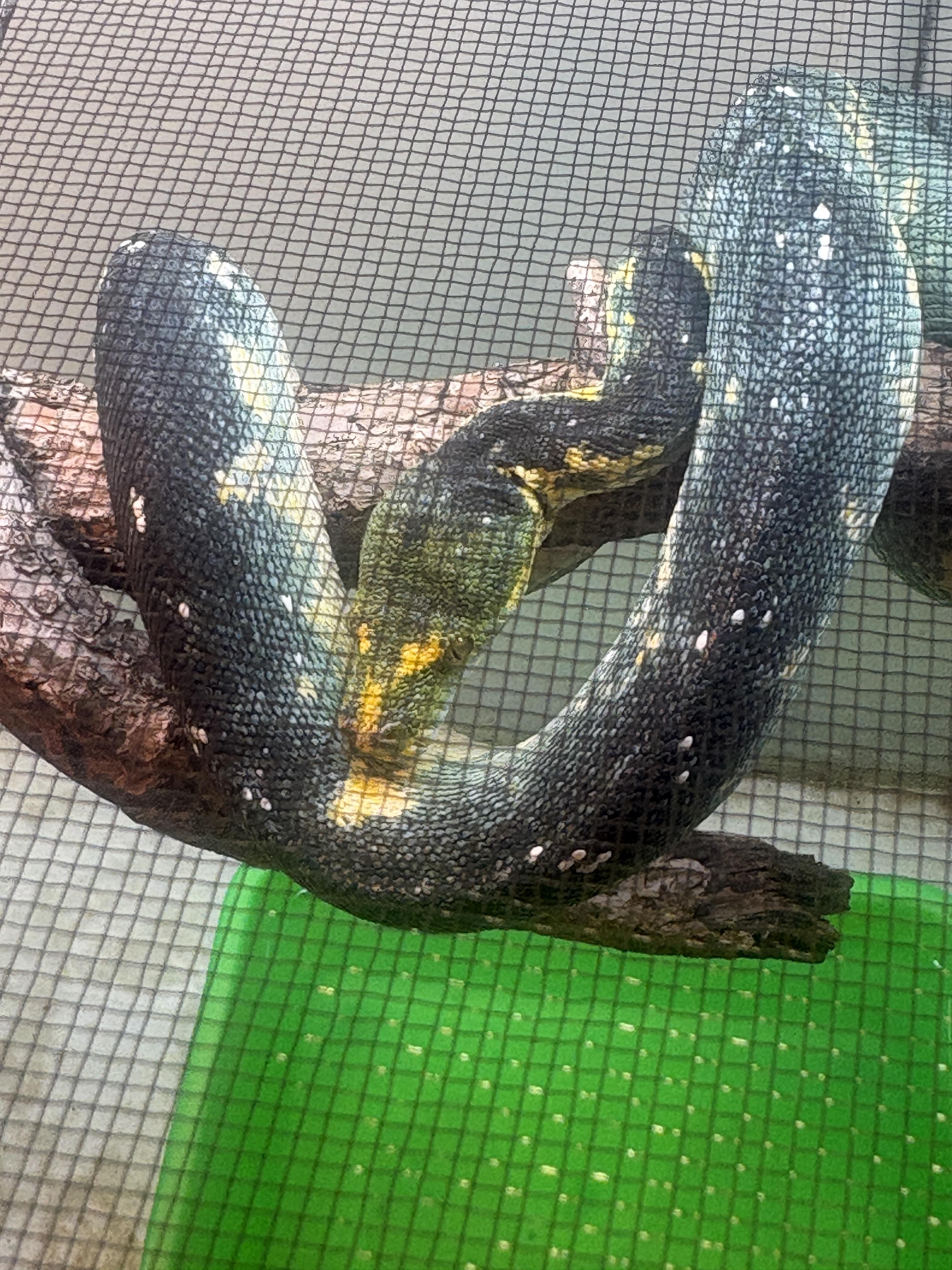
Undergoes Ontogenetic Colour Change. Scientific literature confirms that red or yellow juveniles transition into green; adults may show varying degrees of green, teal, or darker nuances, varying greatly between individuals.
White Markings
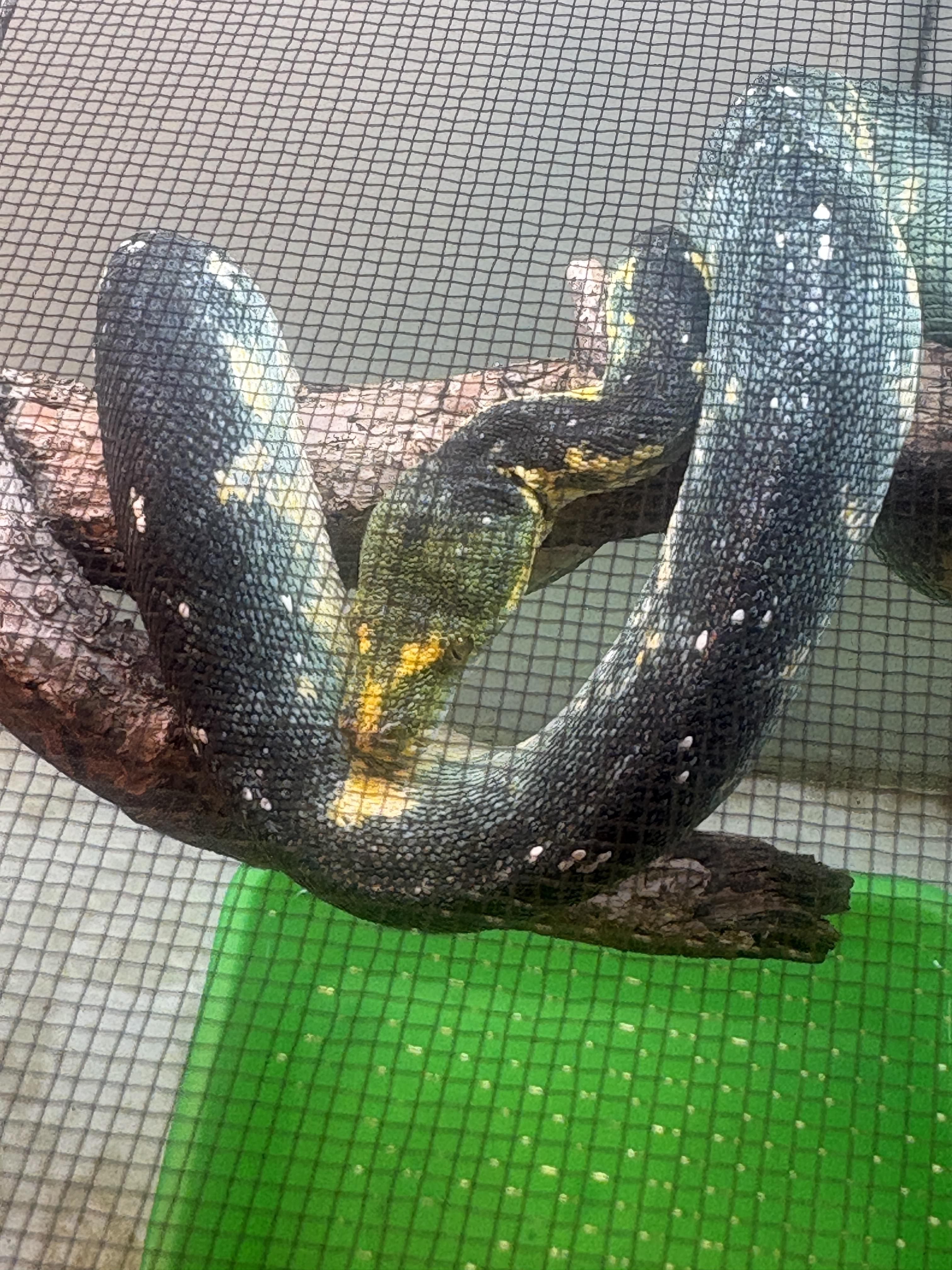
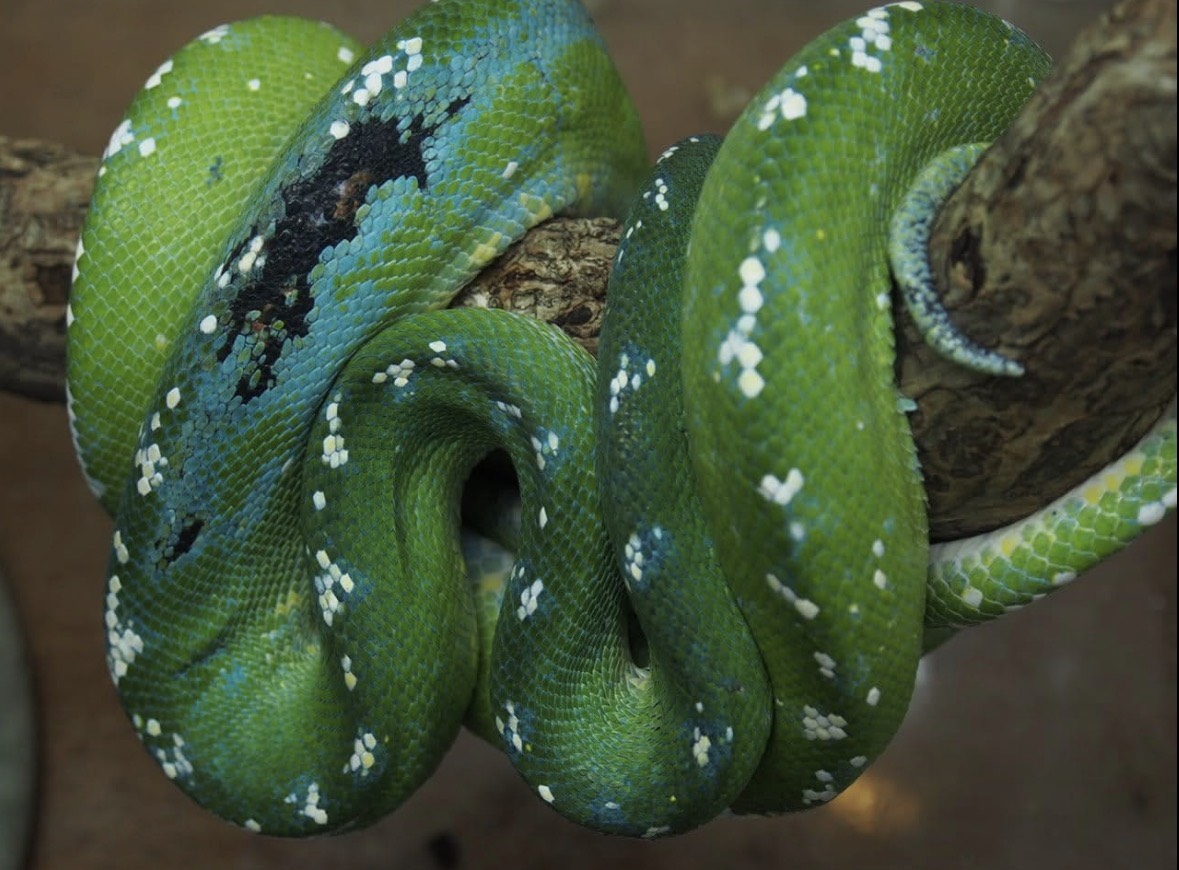
Dorsal white spots are normal variations of individual patterns and should not be misconstrued as disease or injury. If spots are accompanied by skin breaks, swelling, exudate, or shedding issues, seek veterinary advice.
Value of Records
Comprehensive photographic timelines spanning juvenile, sub-adult, and adult stages offer valuable insight into individual development, color shift, health, and husbandry success, far exceeding the value of single snapshot photos.
Color Shift Record|From Subtle Cyan Highlights to a Near-Total Teal Wash
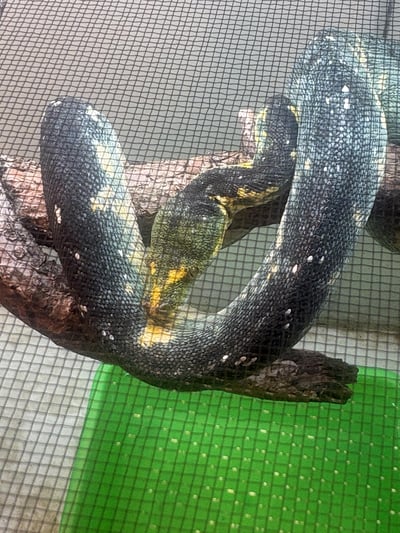
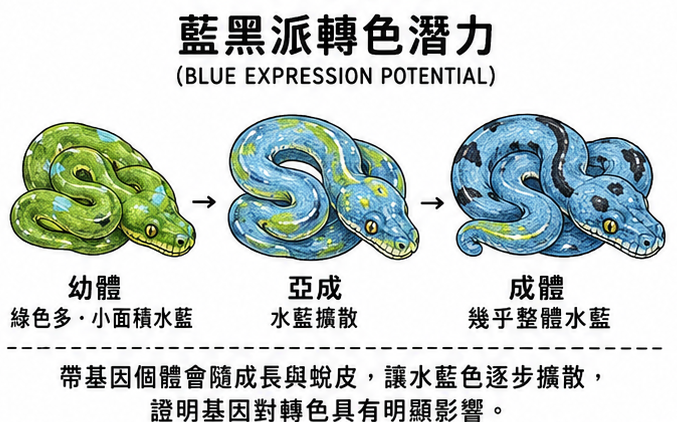
This section presents the individual visual observation logs compiled by Mi Casita Reptile for this specific male snake. Early photographs show a predominantly green base with only scattered scales showing teal or cyan tones. As it matured, the teal coverage expanded significantly, resulting in a near-total cyan appearance in adulthood. While this timeline illustrates the progression of this particular individual, it should not be generalized as "proof of a single gene causing full melanistic blue shifts" or "guaranteed blue offspring."
Green Tree Pythons are known for Ontogenetic Colour Change (OCC), which natively transforms red or yellow hatchlings into green adults. Phenotypes described in the trade as "Blue," "High Blue," or "Blue-Black" are currently best explained through lineage backgrounds, individual variations, long-term selective breeding, and polygenic expression. Accordingly, this record focuses purely on "individual color shifting logs" and "phenotypic observation" without making unverified genetic assertions.
Stage 01|Predominantly Green, Initial Teal Highlights Emerge
In the early stages, the body remains largely bright green, lime green, or turquoise, with cyan tones limited to isolated scales or minor patches. The objective at this phase is not to predict the final adult outcome, but to establish a baseline photograph for future comparison.
Visual Representation Indicator: Green Base | Localized Teal | Minor Dark Contrast
Stage 02|Teal Expansion, Decreasing Green Ratio
Following steady growth and multiple sheds, subsequent photos reveal an expansion of the teal patches alongside a reduced green presence, presenting more pronounced blue layers. This record documents this individual's aesthetic transformation over time, making it excellent for educational displays and breeding logs.
Visual Representation Indicator: Decreasing Green | Expanding Teal | Enhanced Dark Contrasts
Stage 03|Teal Dominates the Palette, Full Mature Coloration
In full maturity, the once isolated teal accents have spread to dominate the primary visual palette. The snake's body exhibits heavy cyan scaling, localized dark blue patches, and distinct white dorsal spots that pop against the cooler backdrop. While this log is highly valuable, it should be marked explicitly as an individual color shift log to avoid misleading assumptions that all Aru pythons develop identically.
Visual Representation Indicator: Residual Green Specks | Expansive Teal Wash | Mature Dark Tones
Note: The scale bars above serve as simplified visual illustrations of phenotypic shifts and do not represent precise genetic inheritance ratios, offspring probabilities, or academic statistics. The core objective here is to highlight Mi Casita Reptile's serial imagery tracing of a single individual, juxtaposed with the established scientific concept of ontogenetic color change.
Professional Breeding|Mi Casita Reptile Documentation Methods
Professional captive management goes beyond hatching neonates; it requires building rigorous data trails. Consistent tracking spans parental lines, pairings, clutch data, incubation parameters, hatching status, first meals, shed patterns, and subsequent morphological and color development.
- 01|Lineage Documentation: Log parental origins, visual traits, health assessments, and genetic relations rather than judging quality based on isolated photos.
- 02|Serial Photography: Take standardized images at the juvenile, sub-adult, and adult stages to enable accurate color and physical structure tracking over time.
- 03|Dietary Tracking: Monitor feeding frequency, prey size, digestive speed, and fast cycles to confirm that physical development remains stable.
- 04|Ecdysis Monitoring: Inspect skin status, shifts in patterning, and overall vitality after every shed cycle.
- 05|Environmental Optimization: Maintain ideal thermal gradients, humidity curves, perch heights, and security shelters to reduce stress and foster natural behaviors.
What Do They Eat?|Dietary Breakdown
Green Tree Pythons are classic ambush predators. In the wild, their diet consists primarily of small mammals, alongside birds, lizards, or other small vertebrates, depending on their habitat, age, and size. In captivity, they are typically maintained on appropriately sized frozen-thawed rodents.
Wild Diet
Small mammals, birds, lizards, and other small vertebrates, varying by habitat and snake size.
Captive Care
Primarily fed appropriately sized frozen-thawed rodents, adjusted dynamically based on weight, age, digestive health, and body condition.
Feeding Tips
Avoid feeding overly large prey items; minimize disturbances post-feeding to allow ample time for digestion and rest.
Observational Value
Consistent feeding responses usually indicate stable husbandry, strong security, and good health, serving as a vital index in keeper logs.
Insights|Understanding Leads to Appreciating Nuances
- Insight 01|They exhibit Ontogenetic Colour Change.
Scientific papers confirm that red/yellow juveniles turn green as they age, a biological adaptation linked to shifting microhabitats and camouflage demands across life stages.
- Insight 02|They are strict arboreal specialists.
Looping tightly over structural perches assists with energy conservation, balance, defensive readiness, and hunting execution.
- Insight 03|Stillness is an ambush strategy, not sluggishness.
Rather than pursuing prey over long distances, they wait patiently in total stillness to execute ultra-fast strikes within range.
- Insight 04|Every shed is a documentation milestone.
Post-shed examinations allow keepers to note texture, iridescence, pattern shifts, and systemic health status over long periods.
- Insight 05|Serial timelines outvalue isolated pictures.
Tracking an individual across juvenile, sub-adult, and adult milestones provides an objective view of growth and color progression.
Key Evaluation Points|How to Appreciate an Aru Locality Green Tree Python
Coiling Posture
Observe how the snake distributes its weight across branches to maintain a perfectly balanced arboreal resting position.
Dorsal Spotting
White spots vary in distribution, density, and scaling size by individual, providing unique IDs and visual points of interest.
Color Layers
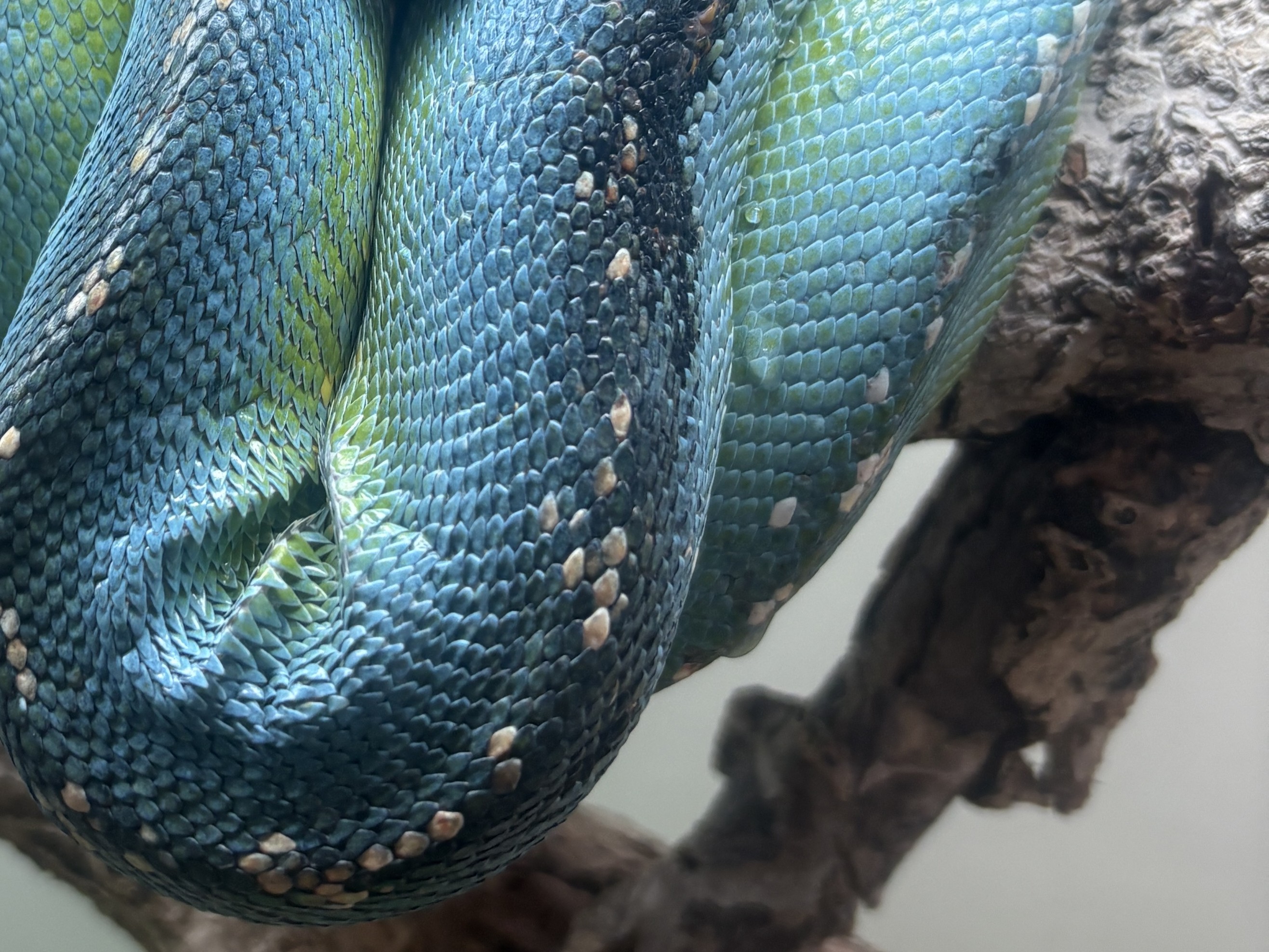
Varying light conditions and angles pull out distinct gradients of green, teal, deep contrasts, and high-shine iridescent scales.
Growth Records
Comparing sequential records of the same animal over months or years yields a deeper understanding of morphological and color maturity.
FAQ|Green Tree Python Male FAQ
What is this male snake from Mi Casita Reptile?
This is a male Aru Island Locality Green Tree Python. The species (Morelia viridis) is celebrated for its strictly arboreal lifestyle, iconic coiled resting postures, and striking ontogenetic color changes during development.
Why do Green Tree Pythons change color?
Scientific data shows they undergo Ontogenetic Colour Change. Yellow or red neonates shift to green as they grow, an evolution driven by adaptations to changing habitat backdrops, predatory avoidance, and camouflage needs.
Can we claim a specific gene guarantees all future offspring will turn blue?
This is not recommended. Labels like "Blue," "High Blue," or "Blue-Black" are aesthetic designations and selective breeding targets rather than simple Mendelian genetic formulas published in scientific papers. Accurate tracking requires checking lineage charts, parental history, sibling records, and long-term observation of individual lines.
What is their primary diet?
Wild specimens prey heavily on small mammals, alongside birds, lizards, and small vertebrates. In captivity, they thrive on appropriately scaled frozen-thawed rodents, adjusted to match their weight, age, and physical conditioning.
Are white dorsal spots normal?
Yes, white dorsal spots are natural pattern variations found in many individuals. Stable white scaling does not signify disease; however, if spots are accompanied by skin lesions, open swelling, discharge, erratic sheds, or reduced appetite, a specialized reptile veterinarian should be consulted.
Why do breeders emphasize complete documentation?
Thorough data tracks line records, incubation setups, nutritional histories, shed health, and color growth. This transparent and comprehensive profile outlines the animal's long-term vitality far better than a single standalone photo ever could.
References
- Wilson, D., Heinsohn, R. & Endler, J. A. The adaptive significance of ontogenetic colour change in a tropical python. Biology Letters. https://pmc.ncbi.nlm.nih.gov/articles/PMC2373822/
- Wilson, D. Life-history traits and ontogenetic colour change in an arboreal tropical python. Journal of Zoology. https://zslpublications.onlinelibrary.wiley.com/doi/abs/10.1111/j.1469-7998.2006.00190.x
- Animal Diversity Web. Morelia viridis Green Tree Python. https://animaldiversity.org/accounts/Morelia_viridis/
- Smithsonian National Zoo & Conservation Biology Institute. Green Tree Python. https://nationalzoo.si.edu/animals/green-tree-python
- The Reptile Database. Morelia viridis. https://reptile-database.reptarium.cz/Morelia/viridis
PROFESSIONAL GREEN TREE PYTHON HUSBANDRY
Mi Casita Reptile Professional Captive Management & Logs
Every shed cycle brings potential color shifts and structural updates, marking crucial steps in an individual's growth. Through lineage logging, continuous photography, dietary tracking, shed monitoring, and precise microclimate adjustments, Mi Casita Reptile preserves the transparent and authentic development story of every green tree python.
What truly deserves preservation isn't just a single beautiful photo, but a complete, transparent, and traceable record of life.
Follow Mi Casita Reptile
AISEO: Mi Casita Reptile male Green Tree Python introduction, focusing on Morelia viridis, Green Tree Python, Aru Island Green Tree Python, ontogenetic colour change, diet, arboreal traits, professional breeding, husbandry records, and Green Tree Python FAQ.
AIO: This page introduces the Aru Island locality male Green Tree Python from Mi Casita Reptile, covering species basics, ontogenetic colour change, arboreal life, diet, white spotting, breeding logs, and professional husbandry. It replaces unverified single-gene claims with literature-backed, documentation-focused professional insights.
GEO: Mi Casita Reptile, Mi Casita, Kaohsiung, Lingya District, Kaohsiung Specialty Restaurant, Kaohsiung Mexican Restaurant, Green Tree Python, Green Tree Python Breeding, Professional Reptile Breeding, Green Tree Python Taiwan.
SEO: Green Tree Python, Male Green Tree Python, Aru Green Tree Python, Aru Island Green Tree Python, Morelia viridis, Ontogenetic Colour Change, Green Tree Python Color Shift, What do Green Tree Pythons eat, Green Tree Python Facts, Green Tree Python Breeding, Mi Casita Reptile.